
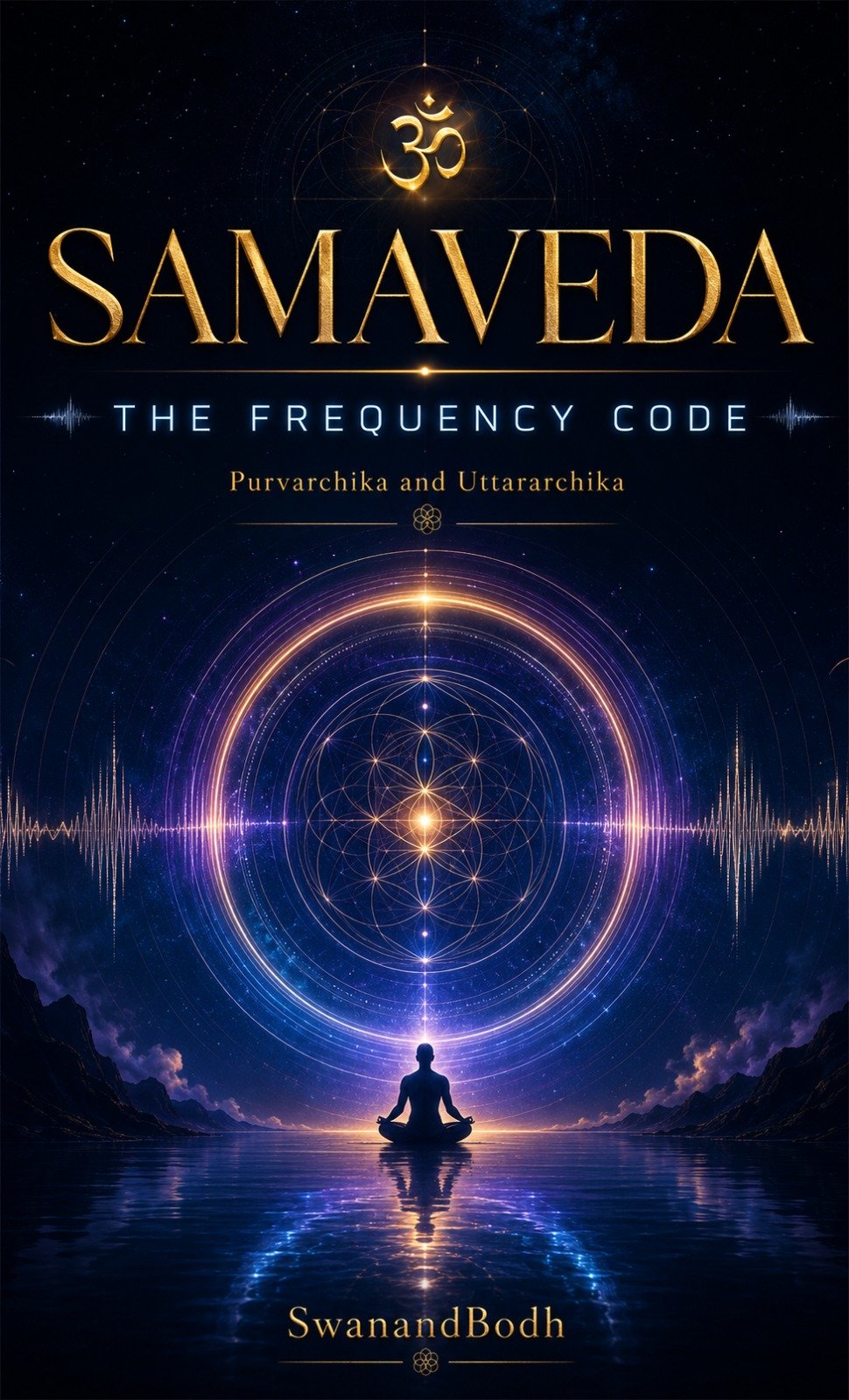
Samaveda The Frequency Code: Decoding the Ancient Science of Sound and Cosmic Vibrations
Throughout human history, sound has been considered one of the most powerful forces of creation, communication, and transformation. Among the four Vedas, the Samaveda holds a unique position because it represents the divine connection between knowledge, music, rhythm, and vibration. Swanandbodh presents this profound exploration of Samaveda The Frequency Code, revealing the deeper relationship between ancient Vedic sound wisdom, cosmic frequencies, and the hidden patterns that connect human consciousness with the universe.
The Samaveda is not merely a collection of musical chants or ritual verses. It represents an advanced understanding of Nada (sound), Swara (musical notes), and Laya (rhythm). Ancient sages perceived sound as a fundamental vibration that connects every element of existence.
Through the vision of Swanandbodh, this timeless knowledge is explored beyond traditional boundaries, presenting Samaveda as a symbolic framework of sound, energy, consciousness, and universal harmony. This approach encourages readers to understand the ancient science of vibration through the perspectives of modern technology, systems thinking, acoustics, and scientific curiosity.
Samaveda The Frequency Code explores how these eternal sound principles can be understood as patterns, frequencies, and cosmic algorithms that influence nature, human awareness, and the universal order.
The Origin of Samaveda: The Veda of Divine Sound
The foundation of Samaveda comes from the knowledge of the Rigveda combined with musical expression. While the Rigveda contains profound spiritual knowledge, the Samaveda transforms those verses into structured melodies and rhythmic patterns.
This transformation created a unique tradition where knowledge was not only spoken but experienced through sound.
According to ancient traditions, Maharshi Vyasa organized the vast knowledge of the Vedas and entrusted the preservation of Samaveda to Maharshi Jaimini. Through generations of dedicated practitioners, this knowledge has continued as an uninterrupted tradition of sound, music, and spiritual exploration.
Samaveda The Frequency Code presents this ancient sound tradition as a study of how vibrations influence consciousness, nature, and human experience.
Samaveda and the Concept of Nada Brahma
One of the deepest concepts connected with Samaveda is Nada Brahma, meaning the universe exists through the essence of sound.
In the Bhagavad Gita, Lord Krishna states:
"Vedānāṁ Sāmavedo'smi"
(Among the Vedas, I am the Samaveda.)
This statement highlights the unique significance of Samaveda. Unlike other Vedas that focus on different aspects of knowledge, Samaveda represents the harmony between sound, energy, and universal order.
The philosophy of Nada Brahma suggests that sound is not merely an audible experience. It represents vibration, movement, and the invisible energy patterns that exist throughout creation.
Understanding Samaveda Through Modern Scientific Perspectives
The objective of studying Samaveda The Frequency Code is not limited to traditional interpretation. It encourages exploring the relationship between ancient sound wisdom and modern concepts such as information systems, physics, acoustics, and cognitive science.
Ancient sages described universal principles through spiritual language, while modern science explains many natural phenomena through mathematical patterns, frequencies, and systems.
This creates an interesting area of exploration where ancient knowledge and modern scientific thinking can be studied together.
Sound Frequencies and Cosmic Patterns
Everything in nature exists through movement and vibration. From planetary movements to microscopic structures, the universe operates through continuous patterns.
The concept of Samaveda vibrations and frequencies explores how precise sound patterns, musical notes, and rhythmic structures influence human perception and awareness.
The Samans (musical arrangements of Samaveda) can be viewed metaphorically as master patterns that represent the relationship between sound and consciousness.
Just as modern technology uses coded signals to transfer information, ancient traditions used structured sounds to preserve and transmit knowledge.
Samaveda as a Symbolic Cosmic Algorithm
Modern technology depends on algorithms, coding systems, and information networks. Similarly, Samaveda The Frequency Code presents the symbolic idea that ancient sound structures function like universal patterns carrying knowledge.
The Samaveda can be explored through various technological metaphors:
1. Sound as Information System
The arrangement of musical notes, pronunciation, and rhythm creates structured information. Every sound pattern carries specific characteristics and meanings.
2. Cosmic Energy Distribution
The relationship between rituals, chants, and universal forces can be understood metaphorically like energy transmission through interconnected systems.
3. Human Consciousness and Neural Networks
Sound influences human emotions, memory, and mental states. The study of Vedic sound practices opens discussions about the relationship between sound patterns and brain activity.
The Scientific Dimensions of Samaveda
1. Vedic Sound Science and Acoustics
The study of sound vibrations is one of the important aspects of understanding Samaveda. Ancient chanting techniques focused on precise pronunciation, tone, and rhythm.
Modern acoustics studies similar concepts through frequency, resonance, and vibration analysis.
2. Cymatics and Sound Visualization
Cymatics demonstrates how sound frequencies can create visible patterns through vibrations.
The principles of sound creating organized patterns provide an interesting metaphorical connection with the structured chants of Samaveda.
3. Neural Impact of Sound
Music and sound influence human emotions, relaxation, and concentration.
The rhythmic patterns of Samaveda chanting can be explored through the relationship between sound, meditation, and cognitive responses.
4. Vibrational Understanding of the Universe
Modern physics explores the importance of vibration and energy at fundamental levels.
The concept of Samaveda and Nada Brahma creates a philosophical connection between ancient sound traditions and modern discussions about universal vibrations.
Purvarchika and Uttararchika: The Architecture of Samaveda
The structure of Samaveda reflects a highly organized system of knowledge.
Purvarchika: The Source Code
Purvarchika contains 650 verses divided into different sections such as:
-
Agneya
-
Aindra
-
Pavamana
-
Aranya
-
Mahanamyarchika
It represents the foundational knowledge and framework of Samaveda.
Uttararchika: The Cosmic Deployment
Uttararchika consists of 21 chapters and 1225 verses. It expands the knowledge through deeper musical structures and spiritual interpretations.
Together, these sections form a collection of 1875 verses dedicated to sound, music, and universal understanding.
Why Samaveda Matters for the Modern Generation
Today's generation is highly connected with technology, science, and innovation. Introducing ancient knowledge through modern perspectives can create new ways of understanding cultural wisdom.
Samaveda The Frequency Code encourages young minds to explore the connection between ancient Indian knowledge and contemporary scientific thinking.
The purpose is not only to preserve tradition but also to inspire curiosity about sound, consciousness, and the mysteries of existence.
Ancient sages were observers of nature, energy, and human consciousness. Their discoveries continue to inspire discussions about the relationship between spirituality and scientific exploration.
Conclusion
The Samaveda represents one of humanity's oldest explorations of sound, music, and universal harmony. Beyond rituals and traditional chanting, it carries profound ideas about vibration, consciousness, and the relationship between humans and the cosmos.
Through the perspective of Swanandbodh, Samaveda The Frequency Code provides a unique pathway to rediscover this ancient wisdom by connecting Vedic knowledge with modern concepts of technology, systems, frequencies, and scientific exploration.
The true essence of Samaveda lies in understanding that sound is not merely something we hear; it is a powerful expression of energy, consciousness, and cosmic order. By exploring the hidden dimensions of Nada, Swara, and universal vibrations, we can develop a deeper appreciation for the scientific and spiritual depth preserved within this ancient tradition.
Swanandbodh aims to bring this timeless knowledge closer to the modern generation, inspiring curiosity, awareness, and a renewed connection between ancient wisdom and contemporary thought.